
When my feelings went flat
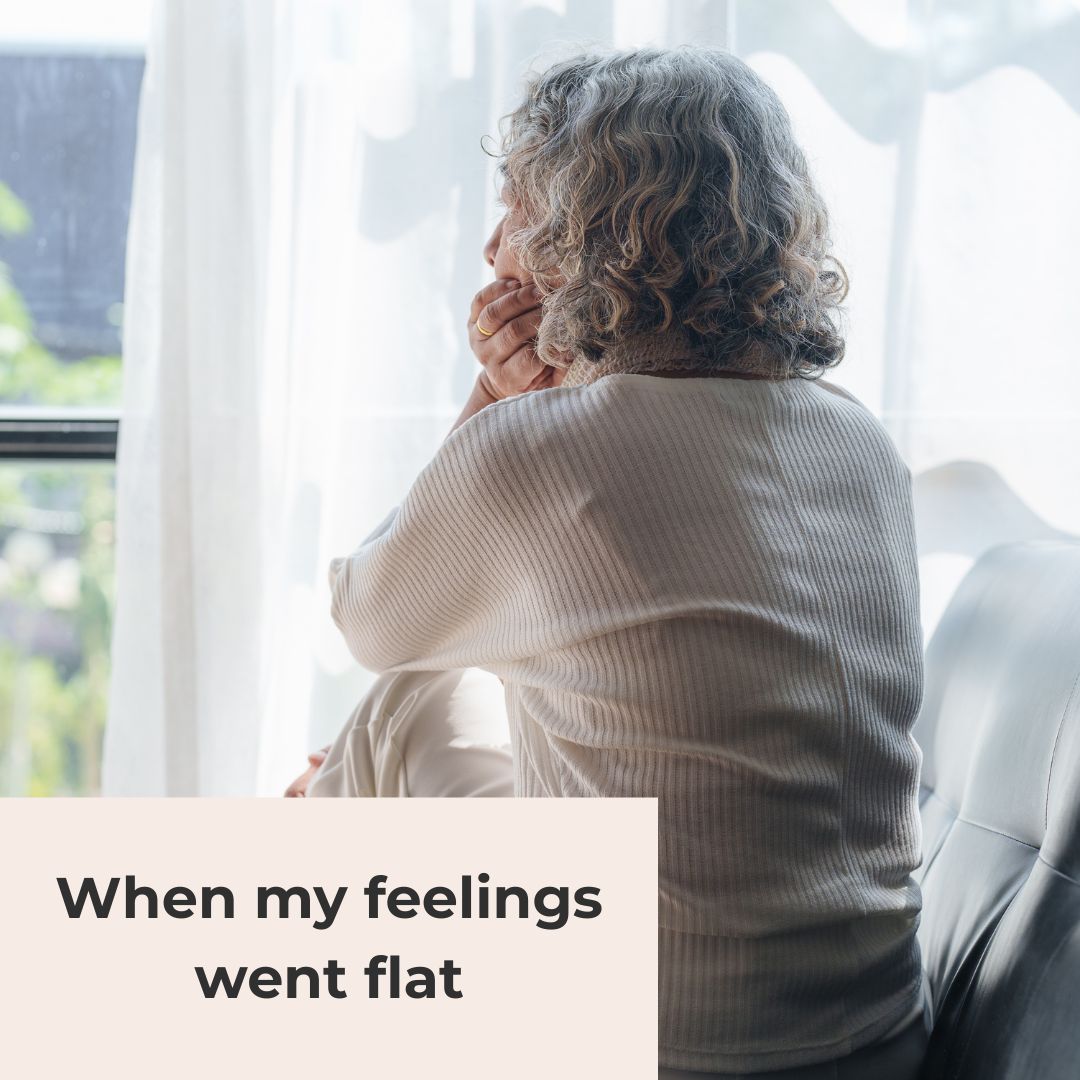
There was a time when I would come home in the morning, close the drapes to block the sun from entering the room, and lie on the couch watching TV.
I only do that when I’m sick; at any other time it means I feel awful.
That was my lowest point!
It started in perimenopause. I suddenly lost interest in the things I used to enjoy. Things that excited me no longer had any effect. My feelings felt flat, and my mood was dangerously low.
I was still going to work. And then I wanted to withdraw to my “cave”, with no desire to do anything, not even the basic things around the house. At times I didn’t want to do those either.
I stopped socialising. I stopped talking to my friends on the phone as much as I did.
I was tired of myself. Same actions, same thoughts. Everything seemed excruciatingly repetitive.
The only thing that kept me grounded was my work. Thank God for that, because it helped me keep my sanity!
And from the outside, I don’t think that the change in me was visible to everyone. At work, I was the same – at least that’s what I think!
However, the ones who were close to me could see the difference. I was always energetic and passionate about doing things. Then my mood dropped, and I didn’t want to do much at all. They knew I was going through a rough time, and I can now realise how challenging that must have been for them as well.
And then I officially entered menopause, and I began to notice some changes.
By that time, I had committed to a few things. I started a consistent meditation practice, and I added exercise three days a week, because I had been diagnosed with osteopenia and I had to do something about it.
I still have my practice.
Additionally, I discovered that my vitamin D was extremely low. That affected my mood in a very big way and brought me that feeling of sadness. I wouldn’t have found that without a blood test.
And it is not just me. Many of my friends and students are going through similar challenges. Some are dealing with physical issues like frozen shoulders and stiff joints. Others are experiencing a loss of interest in what they used to do.
So if you feel this way, know you are not alone; we are all going through intense hormonal fluctuations, and we need to give our bodies time to adjust to the changes that cause this imbalance.
However, this doesn’t mean you can do nothing about it, or that you will feel this way for the rest of your life.
We live in an era where we can be much better informed about these stages and have more options available to us. It can be less challenging than it was in the past, when women had to accept things as they were without being advised on what to do about it!
Take the time to educate yourself. Then start testing things to see what works best for you.
Keep in mind that this process may take some time; trial and error are essential parts of this journey.
You might need to consider changing your gynaecologist. You might need to run some blood tests to check if everything is ok.
For me, moving my body and my overall morning routine are also very important. I wouldn’t be able to get through this without my morning practice.
Explore your options, try different things, and stick with the ones that work best for you!
P.S. If any of this sounded familiar, I have something small for you.
It’s called The 3AM Reset. Three days, three small things – for the nights when you wake at 3AM with the whole list running in your head and can’t get back down.
It’s free, and it asks very little of you.
I’m only an email away.