
Osteopenia at 50: what I'm doing for my bones
A person very close to me had three fractures in her spine without having any accident. She had been taking cortisone for a long period of time, so that had a bad effect on her bones.
That was quite shocking for me.
And because I had done my training in menopause, and I had heard countless stories like hers, I decided to have a bone density scan.
The doctor who prescribed it told me I was too young for this test. I was 49.
Luckily, I didn’t listen.
The diagnosis wasn’t what I expected.
So the second shock came after I was diagnosed with osteopenia. That means bone density is lower than normal, but not low enough to be called osteoporosis.
I know it’s not the end of the world, and I caught it at an early stage. However, I’ve been exercising for many years, and I just didn’t expect this result. I thought that everything was ok!
After the result, I went to an orthopaedist, who I believe is more suitable to help me deal with osteopenia. He had me run some blood tests to check what was happening. He was very helpful, and when I got the results and saw that my vitamin D was extremely low, he gave me a six-month prescription.
And since then I’ve developed an exercise and nutrition plan around how to strengthen my bones.
My normal week has a little bit of everything.
I do yoga and meditation because they help me keep my sanity- and that’s as important as keeping my bones strong- and also help me release stiffness in my joints.
I practise Pilates because it helps me activate my core and have good posture.
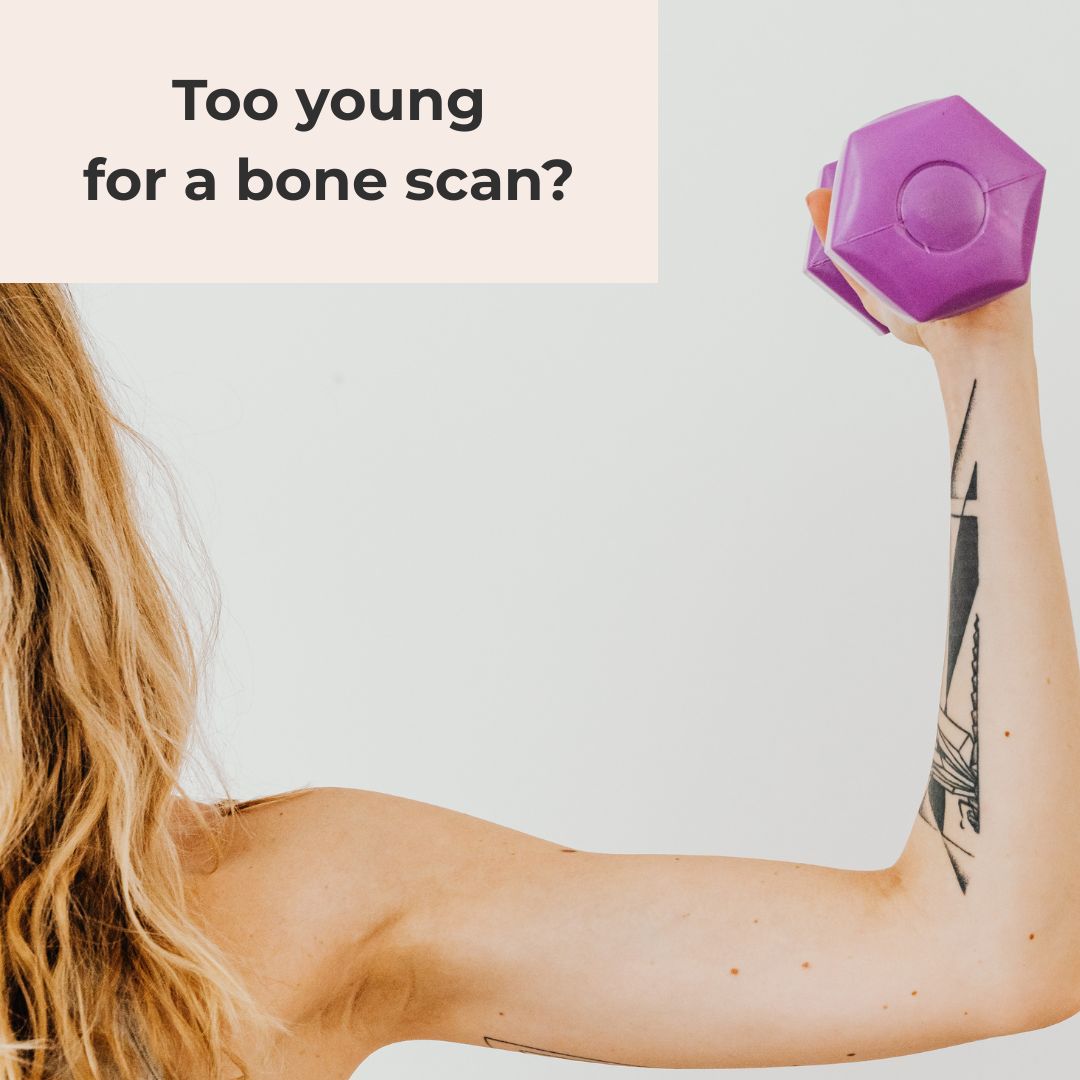
And I lift weights (low impact), and I see it strictly as something my doctor has prescribed for stronger bones.
My sessions are 30 to 40 minutes a day, because that’s what I can keep doing consistently without giving up after a while.
I do everything in moderation. Simple things, not complicated.
Because I also have chondropathy in my knee and hip, I lift weights progressively, not very heavy at first, and I do knee-friendly yoga. I’m cautious, and I adjust exercises (whatever I do) to my needs. I don’t care whether something is easier or doesn’t look a certain way.
And I apply the same principle when teaching. I do the same with my students; I always recommend to them that they can adjust the exercise to their needs.
My body feels great when I move. As I get older, I notice my body easily gets stiff when I don’t. So I make sure to work on my muscles and joints every day.
I’ve seen many people lose their physical independence, and I want to make sure (as much as it’s in my control) that this loss will come as late as possible.
I work every day with many women over the age of 50. Greek women and women from abroad who visit Samos, the island I live on, for their holidays.
And I see that many of the women who live abroad aren’t aware of the bone density scan. Some of them haven’t heard of it at all! (Another shock for me!)
I was speaking with a woman from Norway who told me that her friend had fractures in her spine while gardening, just because she stretched her arm a little further to reach for something. When I told her about the bone density scan, she put everything together; she wasn’t aware. After her holidays, she planned to have one.
Women aren’t informed enough about what to do to prevent osteoporosis, and that needs to change!
What I’d like you to take with you
A woman can lose up to 20% of her bone density in the five to seven years after menopause (Bone Health & Osteoporosis Foundation).
- Ask for a bone density scan. Scans are usually only recommended from the age of 65, or earlier if you have risk factors, like fractures in your family, taking cortisone for a long time, early menopause or smoking. And that’s exactly the problem! I have a student in her thirties who has osteopenia. That rule must change. Doctors should care about how to prevent osteoporosis, and not just how to treat it. So if you hear “you’re too young”, keep asking.
- Give your bones some weight to carry. Bones get stronger when you use them. The Royal Osteoporosis Society recommends strength exercise and impact exercise together, plus balance work, so you’re less likely to fall. You can start with your own body weight, then resistance bands, then weights. When a student tells me she has osteopenia, I tell her to be more consistent with her practice and to add lifting weights to her schedule.
- Check with your doctor what’s safe for you. If you already have osteopenia or osteoporosis, ask what you can and can’t do before you start, and find a teacher who knows how to adjust the exercises for you.
Prevention is so important!
I can’t insist enough on how important it is to exercise. It’s not only good for the body, but it’s also good for the mind. I wish more people realised that as soon as possible.
I think that when we’re young, we don’t think about how we’ll be able to tie our laces, or how we’ll get up from the toilet, or even the bed! We take all of these things for granted, but they’re not!
I see it every day!
So if there’s one thing to keep, it would be this: add exercise to your life and prioritise it as if your life depended on it!
P.S. My bones weren’t the only thing that changed. I also started waking up at 3AM with the whole list running in my head. So I made something small for those nights. It’s called The 3AM Reset: three days, three small things. It’s free, and it asks very little of you.