
Strength is how you make peace with a changing body
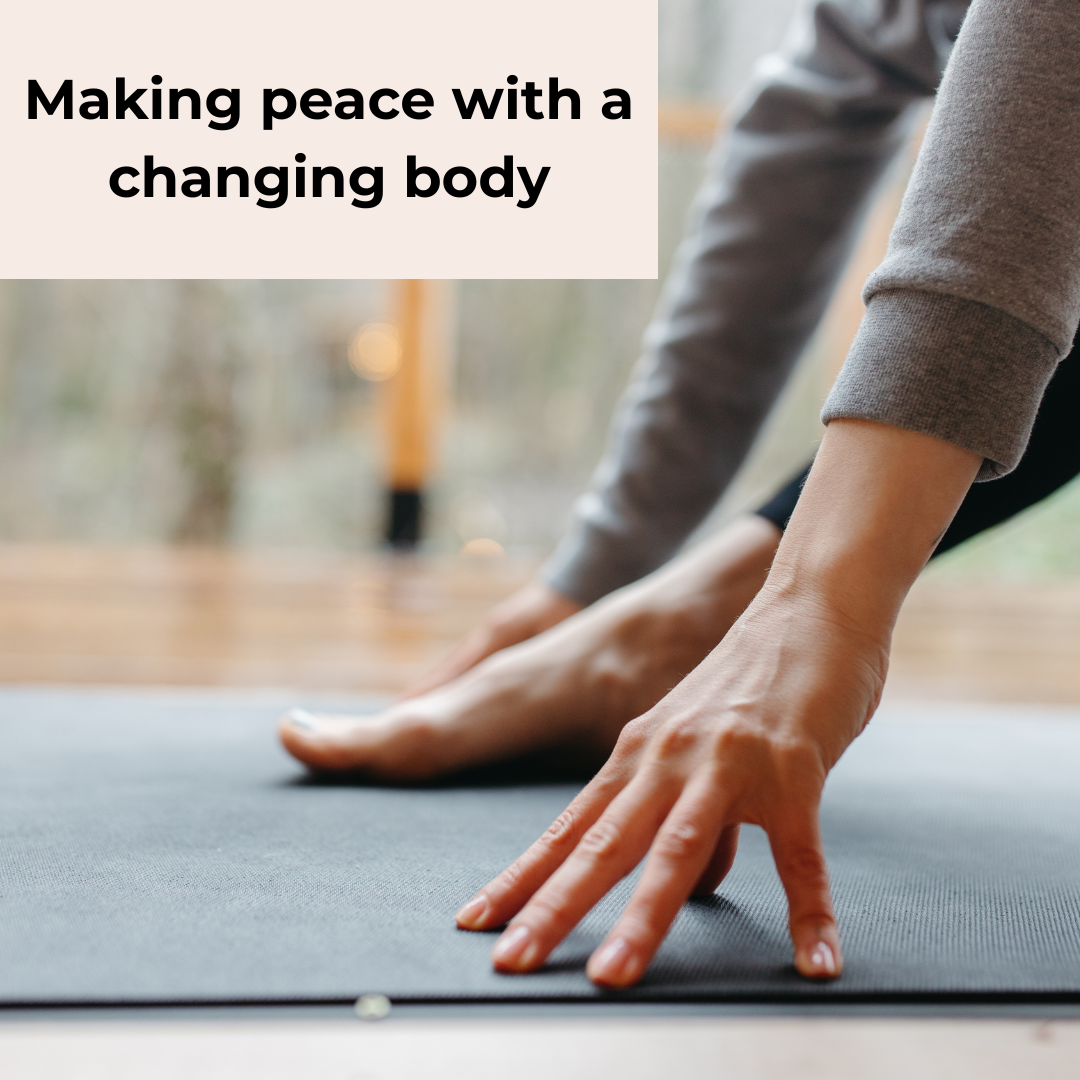
My body changed in one day.
Not slowly, over a year, the way people describe it; in one day. I had my surgery, my ovaries came out, and I was officially in menopause before I’d even gotten home.
My belly was bloated, as if I was pregnant, and my joints started aching out of nowhere.
At the beginning, I was open to it. I’d just had surgery. I thought, give it time.
Time passed, and nothing went back.
And that’s when I understood that this is my body from now on. It was as if I’d somehow been given a new body. And that, my friend, was a little bit shocking for me.
And this is just what happened in my body. Not yours.
Some women go through all of this and barely notice their body change. Some change slowly over years and can’t point to when it started. Mine changed overnight. None of these are right or wrong; they are just different, because we are different.
What nobody explained to me
For most of your life, oestrogen has been deciding where your body stores fat, how much water you hold, and how easily you build muscle. When it drops, all of those instructions change at once.
So the body you’re standing in is following new orders it was given without asking you.
It isn’t a punishment for what you ate last week.
And I know what we do about it, because I did it too. We go straight to food. We cut things out.
But none of that is answering the real question.
The real question is not how do I get my old body back. It’s what does this body need from me now.
What I actually do about it
I don’t have long conversations with my women about how their body looks.
I tell them to concentrate on how their body feels.
That’s not a soft substitute for the real question. It IS the real question, and it’s the one nobody else is asking them.
And then we work on the parts that are carrying them.
The core and the lower back. These are the only parts of the body that aren’t supported by bone, so muscle is all there is. That’s why it matters so much to strengthen them. So many of the imbalances I see in women trace back to a weak core and a weak lower back — the pain that arrives after standing too long, the effort of getting out of the car, the back that starts hurting for no reason at all.
Then the spine. Strong and flexible, both. Most of our nerves run through it, and a stiff spine will quietly take things away from you: turning to reverse the car, reaching the top shelf, getting up off the floor without thinking about it.
Joseph Pilates argued that your real age has less to do with the number. It’s the flexibility of your spine that tells the truth.
So in the first weeks with a woman in her fifties, this is what we actually do.
We move the joints in every way they are built to move. Especially the hips and the spine, which are almost always the tight ones.
We strengthen the core.
And we work on the breath. Most women arrive unfamiliar with it.
Why I care about this so much
When a woman tells me her body isn’t the same anymore, I don’t argue with her. She’s right.
I totally get her!
And then I tell her the thing I actually believe. She needs a body strong enough to carry her through the years that are coming. A body that keeps her standing on her own feet, doing her own things, for as long as possible.
That’s not vanity. That’s freedom.
A woman in my class told me recently that the pain in her lower back had gone. Just gone. And then she said she wished she’d started Pilates years ago.
And that’s the thing I’m trying to say to every woman reading this. We need to put exercise as a priority into our packed schedules (I know!) as soon as we can. Before the pain arrives. Not as a cure, but as prevention — the thing that keeps us strong and flexible for as long as possible.
Making peace isn’t giving up
For me, making peace with it is acceptance. Not defeat. Acceptance.
Because look at what we’re handed every day. A woman who is lean and strong and flexible, who works, who has it all handled.
Come on. That’s nonsense.
And notice that every bit of it is about how a woman looks and what a woman does. Not one word about how she feels. Almost nobody is asking about that.
Meanwhile we’re carrying a to-do list that never ends, comparing ourselves to women who are on a completely different journey, and quietly knocking ourselves down for not looking a certain way.
If you’re reading this and you are not fond of your body right now, I’d ask you to do one thing.
Think about all the ways this body has carried you. Everything it has done for you and got you through, without being thanked once.
And then think about what it needs from you now, at this stage, when it’s asking for help for the first time.
We have to find a way to love these bodies unconditionally. Not when they look right. Now.
Strength is one of the ways that I make peace with mine. Not because it gives me my old body back. Because it gives me this one, working.
So here’s what I’d like you to do this week. Not a diet. Not a plan.
Just notice one thing your body does for you and say thank you for it.
And then hit reply and tell me what it was. I’m only an email away.
P.S. If the nights are the hard part for you too, The 3AM Reset is three days of small things for exactly that.